How To Tell If A Wall Is Load Bearing Before A Kitchen Remodel
One of the most popular kitchen remodeling trends is creating an open-concept floor plan. Homeowners often want to remove walls that separate the kitchen from dining rooms, living rooms, or family rooms to create a brighter, more functional space. Before any wall can be removed, however, it's important to determine whether that wall is load bearing.
A load-bearing wall plays a critical role in supporting the structure of your home. Removing one without proper planning can lead to sagging ceilings, cracked drywall, structural damage, and costly repairs. The good news is that many load-bearing walls can be removed safely when the proper engineering and construction methods are used.
At Covenant Builders, we help homeowners throughout Yavapai County evaluate existing floor plans, identify structural components, and create beautiful open-concept kitchens that are both functional and structurally sound. This guide explains how to identify potential load-bearing walls and why professional evaluation is essential before beginning a kitchen remodel.
Why identifying load-bearing walls matters
Many homeowners assume that any interior wall can simply be demolished during a renovation. In reality, some walls carry substantial loads from upper floors, roof systems, or ceiling structures.
Common reasons homeowners want to identify load-bearing walls include:
-
- Creating an open-concept kitchen layout
- Expanding kitchen islands and entertaining areas
- Combining kitchen and dining spaces
- Understanding remodeling costs
- Avoiding structural damage
- Planning permits and engineering requirements
Professional evaluation removes the guesswork and helps homeowners understand what is possible before construction begins. What appears to be a simple wall removal project may actually require engineered beams, temporary supports, permits, and inspections.
1. What is a load-bearing wall?
A load-bearing wall is a structural wall that supports weight from above and transfers that load safely down to the foundation. These walls are an important part of a home's framing system and help maintain structural stability.
Key characteristics of load-bearing walls include:
-
-
- Supports roof loads: May carry weight from rafters or trusses.
- Supports upper floors: Often carries loads from second-story framing.
- Transfers weight downward: Directs structural loads to foundations or footings.
- May be interior or exterior: Not all load-bearing walls are located on the outside of the home.
- Requires replacement support if removed: Beams or engineered solutions are often necessary.
-
One of the biggest misconceptions homeowners have is assuming a wall isn't load bearing simply because it appears small or because there is no visible support beam. Modern framing systems often conceal critical structural components behind drywall and finishes.
Before any demolition begins, it's important to determine exactly what role a wall plays within the overall structure of the home.
2. Common signs that a wall may be load bearing
While only a professional inspection can provide a definitive answer, several indicators may suggest a wall is carrying structural loads.
Wall runs perpendicular to floor joists:
One of the most common indicators is the relationship between the wall and floor or ceiling joists.
-
-
- Perpendicular walls are more likely to support structural loads
- Parallel walls are less likely, but can still be load bearing
- Joist direction alone does not provide a final answer
-
Wall is located near the center of the home:
Many homes rely on centrally located walls to help support roof and floor systems.
-
-
- Common in older homes
- Frequently supports long floor spans
- May connect directly with foundation supports below
-
Wall aligns with supports below:
Structural loads often transfer through multiple levels of a home.
-
-
- May align with basement walls
- May sit above beams or posts
- May connect directly to foundation elements
-
Another wall exists directly above:
Walls that stack vertically through multiple levels are frequently structural.
-
-
- Common in two-story homes
- May support bedroom or hallway walls above
- Often transfers loads through multiple floors
-
These clues can help identify potential structural walls, but they should never be used as the sole basis for demolition decisions.
3. How professionals determine if a wall is load bearing
Professional remodelers use a variety of methods to determine whether a wall supports structural loads. This evaluation process often occurs during the planning stage of a kitchen renovation.
Common evaluation methods include:
-
-
- Inspecting attic framing systems
- Examining crawlspaces or basements
- Determining floor and ceiling joist direction
- Reviewing original construction plans
- Evaluating load paths throughout the structure
- Consulting structural engineers when necessary
-
In many kitchen remodeling projects, portions of drywall may need to be opened to verify framing conditions. While homeowners are often eager to begin demolition immediately, taking the time to properly evaluate the structure helps prevent costly surprises later.
At Covenant Builders, structural evaluations are an important part of the design-build process because they allow us to develop accurate plans before construction begins.
4. Can a load-bearing wall be removed?
Many homeowners assume that load-bearing walls must remain in place. In reality, most load-bearing walls can be removed when appropriate structural support is installed to replace them.
Key considerations include:
-
-
- Engineered beams: Often used to carry loads after wall removal.
- LVL beams: Laminated veneer lumber is a common structural solution.
- Steel beams: May be required for larger spans.
- Temporary shoring: Protects the structure during construction.
- Permits and inspections: Usually required for structural modifications.
-
The goal is not simply removing a wall. The goal is safely transferring the structural load to a properly designed support system that preserves the integrity of the home.
This is why professional planning is so important. Structural modifications should never be approached as a DIY project.
5. What affects the cost of removing a load-bearing wall?
The cost of removing a load-bearing wall varies depending on the complexity of the structural work required.
Factors that influence pricing include:
-
-
- Length of the wall being removed
- Size and type of replacement beam
- Engineering requirements
- Permit fees and inspections
- Electrical relocation
- Plumbing modifications
- Drywall and ceiling repairs
- Flooring repairs after demolition
-
In some cases, homeowners discover that utility lines run through the wall they want to remove. Relocating plumbing, electrical wiring, HVAC ducts, or gas lines can add complexity to the project.
A professional evaluation provides a much more accurate understanding of project costs than assumptions based solely on the visible wall itself.
6. Why professional planning protects your investment
Removing a wall is often one of the most impactful changes that can be made during a kitchen renovation. When done correctly, it can completely transform how a home feels and functions.
Benefits of professional planning include:
-
-
- Safe structural modifications
- Accurate project budgeting
- Proper permits and inspections
- Reduced risk of delays
- Code-compliant construction
- Long-term structural stability
-
The temptation to remove a wall without proper investigation can lead to serious consequences. Sagging ceilings, cracked finishes, structural movement, and expensive repairs often result when load-bearing walls are removed improperly.
Professional planning helps ensure your kitchen remodel enhances your home rather than creating future problems.
Case example: creating an open-concept kitchen in Prescott
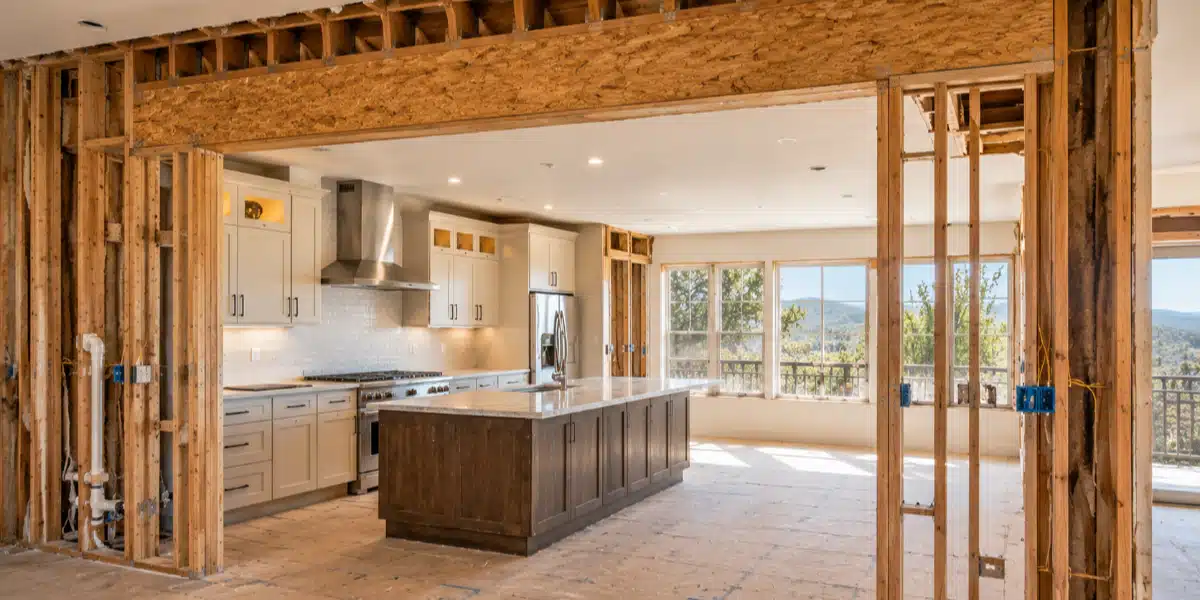
A homeowner in Prescott wanted to combine their kitchen and dining room into a single open-concept living space. The dividing wall appeared relatively small, but an inspection revealed that it was supporting a portion of the roof structure above.
Our team:
-
- Confirmed the wall was load bearing
- Developed a structural support plan
- Installed an engineered LVL beam
- Removed the existing wall safely
- Completed the necessary finish work and remodeling
The result was a spacious, open kitchen with improved sightlines, better traffic flow, and significantly more room for entertaining while maintaining the structural integrity of the home.
Areas we serve
Covenant Builders proudly serves homeowners throughout Yavapai County, Arizona, including:
-
- Prescott
- Prescott Valley
- Chino Valley
- Dewey-Humboldt
- Paulden
- Cottonwood
- Camp Verde
- Clarkdale
- Jerome
- Rimrock
- Village of Oak Creek
- Sedona
Our reputation throughout Yavapai County is built on craftsmanship, communication, attention to detail, and a commitment to delivering remodeling projects that are both beautiful and structurally sound.
Ready to open up your kitchen safely?
If you're considering removing a wall as part of a kitchen remodel, the first step is determining whether that wall is load bearing. Proper planning, structural evaluation, and professional construction can help you achieve the open-concept space you want while protecting the integrity of your home.
Contact Covenant Builders today to schedule your consultation. Our team specializes in kitchen remodeling, whole-home renovations, home additions, structural modifications, and custom remodeling projects throughout Yavapai County. We'll help you evaluate your space, understand your options, and create a kitchen designed around the way you live.