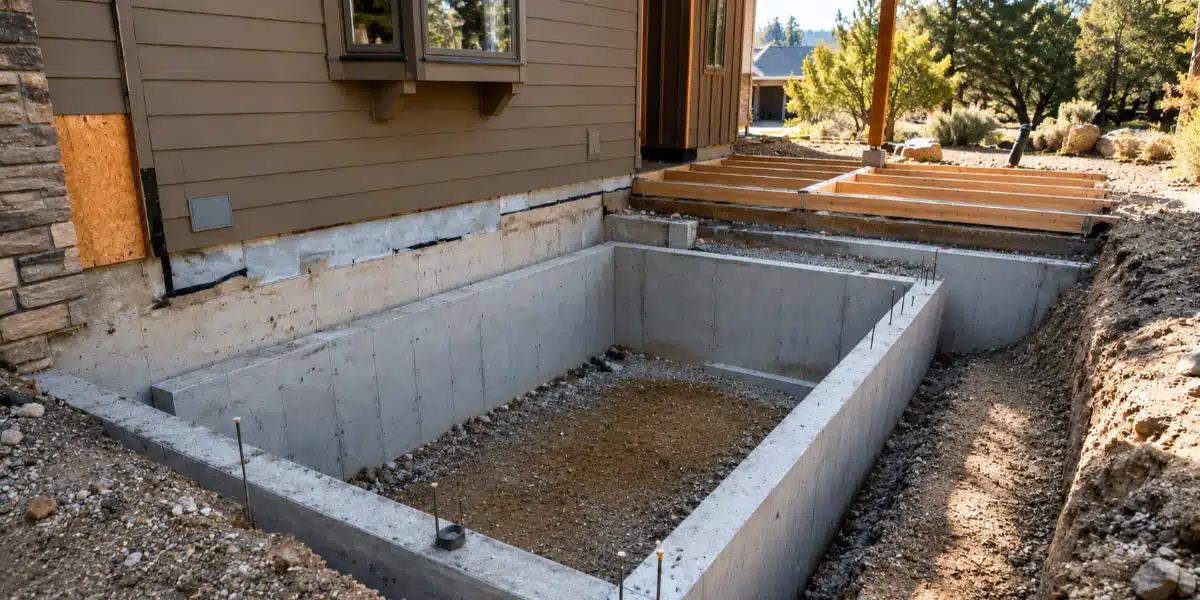
Can My Existing Foundation Support A Home Addition?
One of the first questions homeowners ask when planning a home addition is whether their existing foundation can support the new construction. It's a reasonable concern. After all, every addition relies on a stable structural base, and assumptions about foundation capacity can lead to costly mistakes if they're made too early in the planning process.
The good news is that many homes can accommodate additions successfully. The key is understanding that the answer rarely comes from a visual inspection alone. Foundation age, design, soil conditions, structural loads, and local building requirements all play a role in determining whether an existing foundation can support additional weight.
At Covenant Builders, we help homeowners throughout Yavapai County evaluate their homes before designing additions. This guide explains how foundations are assessed, what warning signs may indicate potential concerns, and how professionals determine whether modifications or upgrades may be necessary before construction begins.
Why foundation evaluations matter before building an addition
Adding square footage changes the structural demands placed on a property. Even a relatively small addition can introduce new loads that must be properly supported and transferred to the ground below.
Common reasons foundations need evaluation include:
-
- Room additions connected to existing structures
- Second-story additions
- Expanded primary suites
- Larger kitchens and living spaces
- Garage conversions and expansions
- Structural modifications to existing homes
A thorough foundation assessment helps identify potential issues early, reducing the risk of structural problems, construction delays, and unexpected costs during the project.
1. Age alone doesn't determine whether a foundation is adequate
Many homeowners assume an older foundation automatically needs replacement before an addition can be built. In reality, age is only one factor among many.
Several variables are more important than age alone:
-
-
- Original construction quality: Well-built foundations often perform well for decades.
- Current condition: Existing cracks, settlement, and movement matter more than age itself.
- Soil performance: Stable soils help foundations remain structurally sound over time.
- Water management: Proper drainage reduces long-term deterioration.
- Maintenance history: Previous repairs and improvements can affect structural capacity.
-
We've evaluated older homes with foundations that remain excellent candidates for additions, while some newer homes may require corrective work before expansion is advisable.
Every property must be assessed individually rather than relying on assumptions based on age.
2. What contractors look for during a foundation evaluation
A professional foundation evaluation involves much more than looking for visible cracks. Contractors examine multiple structural and site-related factors before determining whether additional loads can be supported safely.
Areas commonly evaluated include:
-
-
- Foundation dimensions and thickness
- Visible cracking patterns
- Settlement or movement indicators
- Condition of concrete surfaces
- Drainage around the home
- Structural connections between framing and foundation
- Footing design and construction details
-
In some situations, additional investigation may be required to determine footing sizes, reinforcement details, or soil conditions below the structure.
This evaluation process provides the information needed to make informed design decisions before construction begins.
3. Not all additions place the same demands on a foundation
The type of addition being built plays a major role in determining foundation requirements. Some projects place relatively modest demands on the structure, while others introduce substantial additional loads.
Projects that commonly require more structural analysis include:
-
-
- Second-story additions
- Large room expansions
- Open-concept remodels combined with additions
- Additions requiring long-span beams
- Projects involving significant roof modifications
-
For example, a second-story addition places substantially more load on an existing structure than a small single-story room addition. Understanding those load differences is a critical part of the design process.
Structural calculations help determine whether existing systems can safely support the proposed construction.
4. Warning signs that may indicate foundation concerns
While only a professional evaluation can determine structural capacity, certain warning signs may suggest that further investigation is warranted.
Potential indicators include:
-
-
- Large or widening foundation cracks
- Uneven or sloping floors
- Doors and windows that stick or bind
- Gaps between walls and ceilings
- Visible settlement around the home
- Water intrusion near foundation walls
-
Not every crack or imperfection indicates a major structural issue. Concrete naturally develops some cracking over time. The location, size, direction, and severity of those cracks help determine whether they are cosmetic or structural in nature.
Addressing concerns before designing an addition is almost always easier and more cost effective than discovering problems midway through construction.
5. What happens if foundation upgrades are needed?
Discovering that modifications are needed does not necessarily mean an addition is impossible. In many cases, structural improvements can be incorporated into the project plan.
Potential solutions may include:
-
-
- Additional footings
- Foundation reinforcement
- New support beams
- Structural posts
- Underpinning systems
- Targeted foundation repairs
-
The appropriate solution depends on the home's existing construction, the addition design, and the recommendations of qualified structural professionals.
Identifying these requirements during planning helps create more accurate budgets and construction schedules.
6. Why professional planning protects your investment
Home additions are significant investments. Proper planning helps ensure that the finished project remains structurally sound for decades to come.
Benefits of professional evaluation include:
-
-
- Accurate project feasibility assessments
- Reduced risk of costly surprises
- Code-compliant construction
- Proper structural design
- More accurate budgeting
- Long-term peace of mind
-
Attempting to determine foundation capacity without professional input can lead to incorrect assumptions and expensive corrections later. A thorough evaluation provides the information needed to move forward confidently.
The most successful additions begin with a clear understanding of what the existing structure can support and what modifications may be necessary to achieve the desired design.
Case example: primary suite addition in Prescott Valley
A homeowner in Prescott Valley wanted to build a primary suite addition on the rear of their home. Before finalizing the design, our team evaluated the existing structure and foundation conditions to determine the most practical approach.
Our team:
-
- Reviewed existing foundation conditions
- Evaluated structural load requirements
- Verified site drainage conditions
- Coordinated the necessary design work
- Developed a construction plan that integrated seamlessly with the existing home
The completed addition provided significant new living space while maintaining long-term structural integrity and blending naturally with the original home design.
Areas we serve
Covenant Builders proudly serves homeowners throughout Yavapai County, Arizona, including:
-
- Prescott
- Prescott Valley
- Chino Valley
- Dewey-Humboldt
- Paulden
- Cottonwood
- Camp Verde
- Clarkdale
- Jerome
- Rimrock
- Village of Oak Creek
- Sedona
Our reputation throughout Yavapai County is built on thoughtful planning, quality craftsmanship, attention to detail, and a commitment to helping homeowners expand their living space with confidence.
Ready to find out if your home can support an addition?
If you're considering a room addition, primary suite expansion, second-story addition, or another major remodeling project, understanding your home's structural capabilities is one of the most important first steps. A professional evaluation can help identify opportunities, avoid costly surprises, and establish a clear path forward.
Contact Covenant Builders today to schedule your consultation. Our team specializes in home additions, kitchen remodeling, bathroom remodeling, whole-home renovations, and custom remodeling projects throughout Yavapai County. We'll help you evaluate your existing structure and develop a plan that supports your goals for years to come.